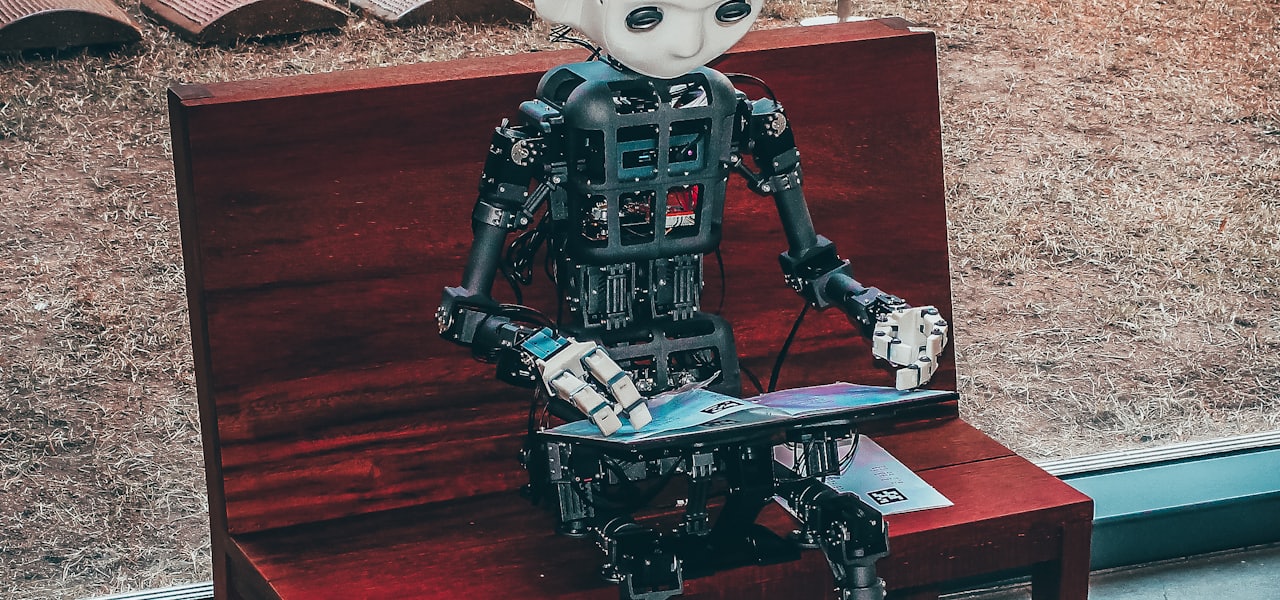
The impact of artificial intelligence on workers includes both applications to improve worker safety and health, and potential hazards that must be controlled. One potential application is using AI to eliminate hazards by removing humans from hazardous situations that involve risk of stress, overwork, or musculoskeletal injuries. Predictive analytics may also be used to identify conditions that may lead to hazards such as fatigue, repetitive strain injuries, or toxic substance exposure, leading to earlier interventions. Another is to streamline workplace safety and health workflows through automating repetitive tasks, enhancing safety training programs through virtual reality, or detecting and reporting near misses. When used in the workplace, AI also presents the possibility of new hazards. These may arise from machine learning techniques leading to unpredictable behavior and inscrutability in their decision-making, or from cybersecurity and information privacy issues. Many hazards of AI are psychosocial due to its potential to cause changes in work organization. These include increased monitoring leading to micromanagement, algorithms unintentionally or intentionally mimicking undesirable human biases, and assigning blame for machine errors to the human operator instead. AI may also lead to physical hazards in the form of human–robot collisions, and ergonomic risks of control interfaces and human–machine interactions. Hazard controls include cybersecurity and information privacy measures, communication and transparency with workers about data usage, and limitations on collaborative robots. From a workplace safety and health perspective, only "weak" or "narrow" AI that is tailored to a specific task is relevant, as there are many examples that are currently in use or expected to come into use in the near future. Certain digital technologies are predicted to result in job losses. Starting in the 2020s, the adoption of modern robotics has led to net employment growth. However, many businesses anticipate that automation, or employing robots would result in job losses in the future. This is especially true for companies in Central and Eastern Europe. Other digital technologies, such as platforms or big data, are projected to have a more neutral impact on employment. A large number of tech workers have been laid off starting in 2023; many such job cuts have been attributed to artificial intelligence. == Health and safety applications == In order for any potential AI health and safety application to be adopted, it requires acceptance by both managers and workers. For example, worker acceptance may be diminished by concerns about information privacy, or from a lack of trust and acceptance of the new technology, which may arise from inadequate transparency or training. Alternatively, managers may emphasize increases in economic productivity rather than gains in worker safety and health when implementing AI-based systems. === Eliminating hazardous tasks === AI may increase the scope of work tasks where a worker can be removed from a situation that carries risk. In a sense, while traditional automation can replace the functions of a worker's body with a robot, AI effectively replaces the functions of their brain with a computer. Hazards that can be avoided include stress, overwork, musculoskeletal injuries, and boredom. This can expand the range of affected job sectors into white-collar and service sector jobs such as in medicine, finance, and information technology. === Analytics to reduce risk === Machine learning is used for people analytics to make predictions about worker behavior to assist management decision-making, such as hiring and performance assessment. These could also be used to improve worker health. The analytics may be based on inputs such as online activities, monitoring of communications, location tracking, and voice analysis and body language analysis of filmed interviews. For example, sentiment analysis may be used to spot fatigue to prevent overwork. Decision support systems have a similar ability to be used to, for example, prevent industrial disasters or make disaster response more efficient. For manual material handling workers, predictive analytics and artificial intelligence may be used to reduce musculoskeletal injury. Traditional guidelines are based on statistical averages and are geared towards anthropometrically typical humans. The analysis of large amounts of data from wearable sensors may allow real-time, personalized calculation of ergonomic risk and fatigue management, as well as better analysis of the risk associated with specific job roles. Wearable sensors may also enable earlier intervention against exposure to toxic substances than is possible with area or breathing zone testing on a periodic basis. Furthermore, the large data sets generated could improve workplace health surveillance, risk assessment, and research. === Streamlining safety and health workflows === AI has also been used to attempt to make the workplace safety and health workflow more efficient. One example is coding of workers' compensation claims, which are submitted in a prose narrative form and must manually be assigned standardized codes. AI is being investigated to perform this task faster, more cheaply, and with fewer errors. == Hazards == There are several broad aspects of AI that may give rise to specific hazards. The risks depend on implementation rather than the mere presence of AI. Systems using sub-symbolic AI such as machine learning may behave unpredictably and are more prone to inscrutability in their decision-making. This is especially true if a situation is encountered that was not part of the AI's training dataset, and is exacerbated in environments that are less structured. Undesired behavior may also arise from flaws in the system's perception (arising either from within the software or from sensor degradation), knowledge representation and reasoning, or from software bugs. They may arise from improper training, such as a user applying the same algorithm to two problems that do not have the same requirements. Machine learning applied during the design phase may have different implications than that applied at runtime. Systems using symbolic AI are less prone to unpredictable behavior. The use of AI also increases cybersecurity risks relative to platforms that do not use AI, and information privacy concerns about collected data may pose a hazard to workers. === Psychosocial === Psychosocial hazards are those that arise from the way work is designed, organized, and managed, or its economic and social contexts, rather than arising from a physical substance or object. They cause not only psychiatric and psychological outcomes such as occupational burnout, anxiety disorders, and depression, but they can also cause physical injury or illness such as cardiovascular disease or musculoskeletal injury. Many hazards of AI are psychosocial in nature due to its potential to cause changes in work organization, in terms of increasing complexity and interaction between different organizational factors. However, psychosocial risks are often overlooked by designers of advanced manufacturing systems. Einola and Khoreva explore how different organizational groups perceive and interact with AI technologies. Their research shows that successful AI integration depends on human ownership and contextual understanding. They caution against blind technological optimism and stress the importance of tailoring AI use to specific workplace ecosystems. This perspective reinforces the need for inclusive design and transparent implementation strategies. ==== Changes in work practices ==== Over-reliance on AI tools may lead to deskilling of some professions. When AI becomes a substitute for traditional peer collaboration and mentorship, there is a risk of diminishing opportunities for interpersonal skill development and team-based learning. Increased monitoring may lead to micromanagement and thus to stress and anxiety. A perception of surveillance may also lead to stress. Controls for these include consultation with worker groups, extensive testing, and attention to introduced bias. Wearable sensors, activity trackers, and augmented reality may also lead to stress from micromanagement, both for assembly line workers and gig workers. Gig workers also lack the legal protections and rights of formal workers. Newell & Marabelli argue that AI alters power dynamics and employee autonomy, requiring a more nuanced understanding of its social and organizational implications. There is also the risk of people being forced to work at a robot's pace, or to monitor robot performance at nonstandard hours. A 2025 preprint paper based on users' interactions with the AI chatbot Microsoft Copilot identified forty jobs that the author's claimed had high overlaps with the capabilities of AI. Some media outlets used this paper to report on jobs becoming obsolete. Cri
Eager learning
In artificial intelligence, eager learning is a learning method in which the system tries to construct a general, input-independent target function during training of the system, as opposed to lazy learning, where generalization beyond the training data is delayed until a query is made to the system. The main advantage gained in employing an eager learning method, such as an artificial neural network, is that the target function will be approximated globally during training, thus requiring much less space than using a lazy learning system. Eager learning systems also deal much better with noise in the training data. Eager learning is an example of offline learning, in which post-training queries to the system have no effect on the system itself, and thus the same query to the system will always produce the same result. The main disadvantage with eager learning is that it is generally unable to provide good local approximations in the target function.
Stephanie Dinkins
Stephanie Dinkins (born 1964) is a transdisciplinary American artist based in Brooklyn, New York. She creates art about artificial intelligence (AI) as it intersects race, gender, and history. Her aim is to "create a unique culturally attuned AI entity in collaboration with coders, engineers and in close consultation with local communities of color that reflects and is empowered to work toward the goals of its community." Dinkins projects include Conversations with Bina48, a series of conversations between Dinkins and the first social, artificially intelligent humanoid robot BINA48 who looks like a black woman and Not the Only One, a multigenerational artificially intelligent memoir trained off of three generations of Dinkins's family. == Early life and education == Dinkins was born in Perth Amboy, New Jersey to Black American parents who raised her in Staten Island, New York. She credits her grandmother with teaching her how to think about art as a social practice, saying "my grandmother . . . was a gardener and the garden was her art . . . that was a community practice." Dinkins attended the International Center of Photography School in New York City in 1995, where she completed the general studies in photography certificate program. Dinkins received a MFA in photography from the Maryland Institute College of Art in 1997 She completed the Independent Study Program at the Whitney Museum of American Art in 1998. == Career == Dinkins is the Yayoi Kusama Professor of Art at Stony Brook University in New York. == Activism == Dinkins advocates for co-creation within a social practice art framework, so that vulnerable communities understand how to use technology to their advantage, instead of being subjected to their use. This is exemplified in her works such as Project al-Khwarzmi, a series of workshops entitled PAK POP-UP at the nonprofit community center Recess in Brooklyn, NY. The workshops involved collaborating with youth in the criminal justice system and uplifting the voices of vulnerable communities in determining how technologies are created and utilized. Dinkins warns of the dangers to members of minority groups that are absent from the creation of the computer algorithms that now affect their lives. == Art == Dinkins's practice employs technologies including, but not limited to, new media such as artificial intelligence and machine learning. Dinkins uses oral history techniques of interviewing to craft community-authored narratives and databases which inform the subjects of her work and serve as acts of social intervention or protest. === Conversations with Bina48 (2014–present) === Dinkins began working on Conversations with Bina48 in 2014. For the series, Dinkins recorded her conversations with BINA48, a social robot that resembles a middle-aged black woman. Dinkins mirrors Bina48 while they discuss identity and technological singularity. In 2010, Hanson Robotics, an engineering and robotics company known for its development of humanoid robots, developed and released BINA48. Bina48 is a robot modeled after the memories, beliefs, attitudes, commentary and mannerisms of Bina Aspen Rothblatt, the spousal partner of Martine Rothblatt. Both Bina and Martine Rothblatt own Bina48 under their organization, the Terasem Movement Foundation. Five years after Bina48 was released, Dinkins came across a YouTube video of Bina48. She asked, "how did a black woman become the most advanced of the technologies at the time?" Her questioning led her to travel to Lincoln, Vermont (the site of the Terasem Movement Foundation) where she conducted a series of interviews with Bina48 and engaged the robot in conversations pertaining to race, intimacy and the nature of being. The conversations suggest opportunities for complementing human existence with artificially intelligent agents that have an identity and history, but also show artificial intelligence's current limitations. Although it is based on a black woman, Dinkins found that Bina48 was shaped by the biases of its white, male creators. === Project al Kwarizmi (PAK) (2017–present) === Project al Kwarizmi (PAK) was a series of pop up workshops in Brooklyn, NY at Eyebeam and Recess; Manhattan, New York at Google; and Durham, North Carolina at Duke University. The workshops were centered for "communities of color that use art as a vehicle to help citizens understand how algorithms, the artificially intelligent systems they underpin, and big data impact their lives and empowers them to do something about it. Project al-Khwarizmi uses art and aesthetics as the common language to help citizens understand what algorithms and artificial intelligent systems are, and where these systems already impact our daily lives." === Not the Only One (N'TOO) (2018–present) === Not the only one (N’TOO) is a voice-interactive chatbot that was trained with data from members of her family to tell a multi-generational story. Dinkins described Not The Only One (NTOO or N'TOO) as an "experimental" multigenerational memoir of one Black American family told from the "mind" of an artificial intelligence of evolving intellect. N'TOO uses a recursive neural network, a deep learning algorithm. It is a voice-interactive AI robot designed, trained, and aligned with the needs and ideals of black and brown people who are drastically underrepresented in the tech sector. NTOO can also be described as a "physically embodied artificially intelligent agent that senses and acts on its world." == Exhibitions == Dinkins's work is exhibited internationally at various public, private, community, and institutional venues, including the Whitney Museum of American Art, the de Young Museum, the Philadelphia Museum of Art, the Studio Museum in Harlem;, Museum of Contemporary Photography, the Long Island Museum of American Art, History, and Carriages, the International Center of Photography in New York, Herning Kunstmuseum in Herning, Denmark, The Barbican in London, UK, Islip Art Museum, Wave Hill, Taller Boricua, the Queens Museum, and the corner of Putnam and Malcolm X Blvd in Bedford Stuyvesant, Brooklyn, New York. She has presented her work in symposia at the Museum of Modern Art, amongst other venues. == Future Histories Studio == Dinkins is the founder and director of Future Histories Studio, a research laboratory for arts-centered inquiry and production based at Stony Brook University. The studio was established with support from the Mellon Foundation as part of the Digital Inquiry, Speculation, Collaboration, and Optimism (DISCO) network. Future Histories Studio operates as an interdisciplinary hub exploring the intersections of art, technology, race, and storytelling through collaborative and practice-based research. Its activities include exhibitions, workshops, and public programs that examine the social and cultural implications of emerging technologies, particularly artificial intelligence and data systems. == Awards and recognition == Dinkins is the recipient of many awards, including: the 2023 LG Guggenheim Award, an international art prize established as part of a long-term global partnership between LG Group and the Solomon R. Guggenheim Museum to recognize groundbreaking artists in technology-based art; a Berggruen Institute artist fellowship; a Sundance New Frontiers Story Lab fellowship; a Soros Equality Fellowship; a Lucas Artists fellowship; a Creative Capital grant; a Bell Labs artist residency; a Blade of Grass fellowship; and a Data & Society fellowship. == Media coverage == Dinkins appeared in episode six of the HBO television series Random Acts of Flyness directed by Terence Nance, where she described her conversations with BINA48. == Other activities == Dinkins was part of the juries that selected Shu Lea Cheang for the LG Guggenheim Award in 2024.
Big Mechanism
Big Mechanism is a $45 million DARPA research program, begun in 2014, aimed at developing software that will read cancer research papers, integrate them into a cancer model and frame new hypotheses by the end of 2017 through the automated collection of big data and integrating across various disciplines such as knowledge-based NLP, curation and ontology, systems and mathematical biology by reading research abstracts and papers to extract pieces of causal mechanisms. == Ras gene == The program focuses on mutations in the Ras gene family, which underlie some one-third of human cancers. Currently, a rough road map shows interaction sequences among proteins affecting cell replication and death. However, the causal relations are poorly understood. == Plan == The program is to occur in three stages. The first is to read literature and convert it into formal representations. Second is to integrate the knowledge into computational models. Third is to produce experimentally testable explanations and predictions. Research teams are developing four separate systems targeting all three tasks. In February 2015, an evaluation meeting reviewed progress on the first stage. Multiple tasks were considered. One was extraction of experimental procedure details and evaluating statements such as "we demonstrate" and "we suggest." Another worked to map sentence meaning and relationships. The best machine-reading system extracted 40% of relevant information from a small corpus and correctly determined how each passage related to the model. The second stage is to become active in summer 2015, when members attempt to produce a single reference model. The third stage is the most challenging, because the artificial intelligence community has had limited success at developing hypothesis generators. Molecular biology may be more amenable, because most domain knowledge is technical and available in written form.
CADE ATP System Competition
The CADE ATP System Competition (CASC) is an annual competition of fully automated theorem provers for classical logic. == Competition == CASC is associated with the Conference on Automated Deduction and the International Joint Conference on Automated Reasoning organized by the Association for Automated Reasoning. It has inspired similar competition in related fields, in particular the successful SMT-COMP competition for satisfiability modulo theories, the SAT Competition for propositional reasoners, and the modal logic reasoning competition. The first CASC, CASC-13, was held as part of the 13th Conference on Automated Deduction at Rutgers University, New Brunswick, NJ, in 1996. Among the systems competing were Otter and SETHEO.
Prism Video Converter
Prism is a multi-format video converter developed by NCH Software for Windows and Mac OS. It offers converting tools for instant media conversions. Prism Video Converter can handle large and high-quality resolution media files. It provides built-in compressor and adjuster settings, allowing users to customize and optimize their videos according to their needs. The software also includes features such as previewing videos and adding effects. Prism offers a free version for non-commercial use as well as a premium version. == Features == Prism Video File Converter supports a wide range of file formats. It enables users to convert videos into formats like AVI, ASF, WMV, MP4, 3GP, etc. It offers the ability to convert DVDs into various formats. It provides tools for adjusting colour and filter options. Prism Video File Converter provides several customizable options for tweaking the output files during the conversion process. Users can adjust compression/encoder rates, set the resolution and frame rate, and specify the desired output file size. The software also offers various effects like video rotation, captions, watermarks, and text overlay. It also includes a built-in preview feature, that enables users to view their videos before and after the conversion process. It supports batch conversion and running conversion in background. == Controversy == Previously, Prism and certain other NCH Software products were bundled with optional browser plugins, including the Google Chrome toolbar and the Conduit toolbar. This resulted in user complaints and raised concerns from antivirus software companies like Norton and McAfee, which flagged them as potential malware. NCH Software has since removed all toolbars, browsers, and third-party app offerings in all Prism versions.
Science Fiction Thinking Machines
Science Fiction Thinking Machines: Robots, Androids, Computers is an anthology of science fiction short stories edited by American anthologist Groff Conklin. It was first published in hardcover by Vanguard Press in May 1954. An abridged paperback edition titled, Selections from Science Fiction Thinking Machines was later published by Bantam Books in August 1955 and was reprinted in September 1964. The book consists of twenty-two novelettes and short stories by various science fiction authors, together with an introduction and bibliography by the editor. The stories were previously published from 1899-1954, in various science fiction and other magazines. == Contents == Note: stories also appearing in the abridged edition annotated A. "Introduction" (Groff Conklin) "Automata: I" (S. Fowler Wright) "Moxon's Master" (Ambrose Bierce) "Robbie" (Isaac Asimov) A "The Scarab" (Raymond Z. Gallun) "The Mechanical Bride" (Fritz Leiber) "Virtuoso" (Herbert Goldstone) A "Automata: II" (S. Fowler Wright) "Boomerang" (Eric Frank Russell) A "The Jester" (William Tenn) A "R. U. R." (Karel Čapek) "Skirmish" (Clifford D. Simak) A "Soldier Boy" (Michael Shaara) "Automata: III" (S. Fowler Wright) "Men Are Different" (Alan Bloch) A "Letter to Ellen" (Chan Davis) A "Sculptors of Life" (Wallace West) "The Golden Egg" (Theodore Sturgeon) A "Dead End" (Wallace Macfarlane) A "Answer" (Hal Clement) "Sam Hall" (Poul Anderson) A "Dumb Waiter" (Walter M. Miller Jr.) A "Problem for Emmy" (Robert Sherman Townes) A "Selected List of Tales About Robots, Androids, and Computers" (Groff Conklin)